

Booqable Developer & Custom Integration
Since 2006 · Rental sites shipped nationally · Missouri
Custom booking flows, e-signature waivers, dynamic pricing, webhook automation, and native website integration for boat, equipment, party, and event rental businesses. When the default Booqable widget cannot do what your business actually needs, we build it on the Boomerang API. Real code on your site, not a floating cart. Call (573) 746-2417.
Booqable is a solid rental platform. Their built-in JavaScript snippet drops a shopping cart onto your website, their hosted shop handles checkout, Zapier and Make.com connect you to Xero, QuickBooks, and a few thousand other apps, and their first-party guides walk you through installing the widget on WordPress, Squarespace, Shopify, and Webflow. For a lot of rental businesses, that is enough.
The wall shows up when your business is not a standard cart-and-checkout. If you take deposits by phone, capture waiver signatures before pickup, price delivery by mile, split captained vs self-drive, ask a party captain to confirm every booking, sync a passenger list into your ops tool, or need the cart to live inside a bespoke booking flow on your marketing site, the default widget cannot do it. That is where custom development on the Booqable Boomerang API comes in.
We build on top of Booqable using its official developer API, so all of your inventory, orders, customers, and payments still live in Booqable and your team can still run the business from the same admin they already learned. We just move the guest-facing booking experience onto your own site and add the workflow pieces the widget cannot do.
Native booking form on your site with live Booqable availability, your calendar, your form fields, your visual design. Guests never see the floating widget. Powered by the Boomerang API.
Drawn-signature rental agreements and per-passenger liability waivers captured on your site, archived on your server as legal artifacts, emailed to you with the signature attached, and posted as a note back on the Booqable order.
Server-side pricing rules for pickup, drop-off, and per-mile delivery. Live quote on your booking page and the correct fee line injected into the Booqable order via the API. Your rate table, your rules.
Booqable fires an event, we catch it, and the right thing happens automatically: waiver invites to the guest, prep sheets to your team, notes on the order, calendar entries, downstream tool syncs. Zapier when it fits, custom when it does not.
Booqable dropped into Squarespace, WordPress, Shopify, Webflow, Wix, or a fully custom site, tuned so the checkout matches your brand instead of the default widget. If the platform limits how far the embed can go, we swap to an API-driven flow.
Booqable is great for the business owner. When your dispatcher, captain, or delivery driver needs a screen designed for their job, we build a lightweight console on top of the API. Read-only or two-way.
Booqable stays the system of record. We move the guest-facing experience onto your site and add the workflow pieces the widget cannot do.
Serengeti Rentals runs captained charters and self-drive rentals out of 7 mile marker on the Gravois Arm. The owner wanted a real marketing site, a booking flow guests would trust, and the safety pieces (waivers, deposit confirmation) handled online instead of at the dock.
We built it end to end on Chosen, our custom PHP framework, with Booqable as the rental backend. What that looks like in practice:
The Booqable admin still runs the business. The guest never sees a stock rental widget.
The right integration approach depends on the site your business already runs on. Here is the plain version per platform.
Booqable ships a JavaScript snippet that drops the cart on any WordPress page. That works. It also caps out fast. For a WordPress site that needs a custom booking form, product filtering by rental duration, a members-only rate table, or a WooCommerce-style listing built on Booqable inventory, we replace the widget with a WordPress plugin that calls the Boomerang API and renders native templates in your theme. Your existing hosting, your existing theme, your existing SEO. Booqable behind the scenes.
Squarespace allows the JavaScript snippet but restricts how deep any embed can go. For a Squarespace site whose brand needs to feel bespoke or whose booking flow needs custom fields, we usually build a companion subdomain (for example book.yoursite.com) that runs the custom booking flow on the Booqable API and links back into the Squarespace marketing site. Guests never leave your brand. Squarespace still hosts the marketing content the owner can edit.
Booqable and Shopify play well because Shopify's Liquid theme system gives us enough surface to render Booqable data natively without a floating widget. Custom sections, custom product pages, and Shopify-side checkout for retail items while Booqable handles the rental side. If you sell rentals plus merchandise, this is usually the cleanest split.
Webflow's custom-code support handles the Booqable JavaScript embed cleanly, but Webflow's design freedom is exactly why most Webflow sites need custom Booqable work, because the stock widget clashes with the design. Same pattern as Squarespace: keep the marketing site on Webflow, put the booking flow on a companion subdomain that talks to the Booqable API, brand-match the whole thing.
Wix has improved on custom-code lately, but Booqable customization on Wix still hits guardrails. For most Wix sites that outgrow the default widget, the practical answer is to migrate to a platform with a real developer surface (WordPress, Webflow, or a custom build) and keep Booqable as the backend. We handle that migration in place.
When there is no CMS in the picture, or when the site is a fresh build, we skip the widget entirely and render Booqable data server-side into your framework of choice. This is the most flexible path and often the fastest to launch because there is no widget-vs-theme fighting. The Serengeti Rentals build above runs this pattern on our Chosen framework.
Here is what a real Booqable API integration includes, versus what the JavaScript embed handles for you. Both are valid, but they are not the same product.
All of that is real code that lives in your project, not a Zap or a Make scenario. When Booqable rolls out an API change, we patch our own code. When you need a new feature, it is an engineering ticket, not a "wait for the platform" ticket.
We only recommend Booqable when it actually fits. If your business is one of these, we will say so and steer you elsewhere.
Booqable shines for boats, party equipment, tools, cameras, bikes, kayaks, tents, tables, chairs, sound and lighting, and any inventory-tracked short-duration rental where you need real availability logic. If that is you, custom Booqable development is one of the best returns you can put on a rental site.
Every project is a flat fee in writing after a short discovery call. A custom Booqable booking flow with waivers and email automation on an existing site usually lands in the low to mid four figures. A full rental marketing site plus the custom booking flow, waivers, dynamic pricing, and webhook automation (a Serengeti-scale build) is a mid four figures to low five figures range depending on how many pages, boats or products, and add-on workflows are in scope.
Booqable subscription is not on our invoice. You pay Booqable directly for their platform. Our fee is for the custom development that runs on top of it. Same for Square, Stripe, or whatever payment processor Booqable is wired to.
We are not Booqable employees, and this is not an official partnership. We build against their public developer API. Booqable does not endorse us specifically. Their docs, their support team, and their platform are theirs; the custom code that runs on top of them is ours.
We do not lock you in. The custom code we write is yours. Source in your repo if you want it. Hosting on your infrastructure or on ours, your choice. If you ever want to rip our custom flow out and go back to the default widget, that is a one-file deletion and a Booqable settings toggle.
Recent work
A sample from the portfolio. Every one of these is a site we designed, built, or are actively maintaining today.
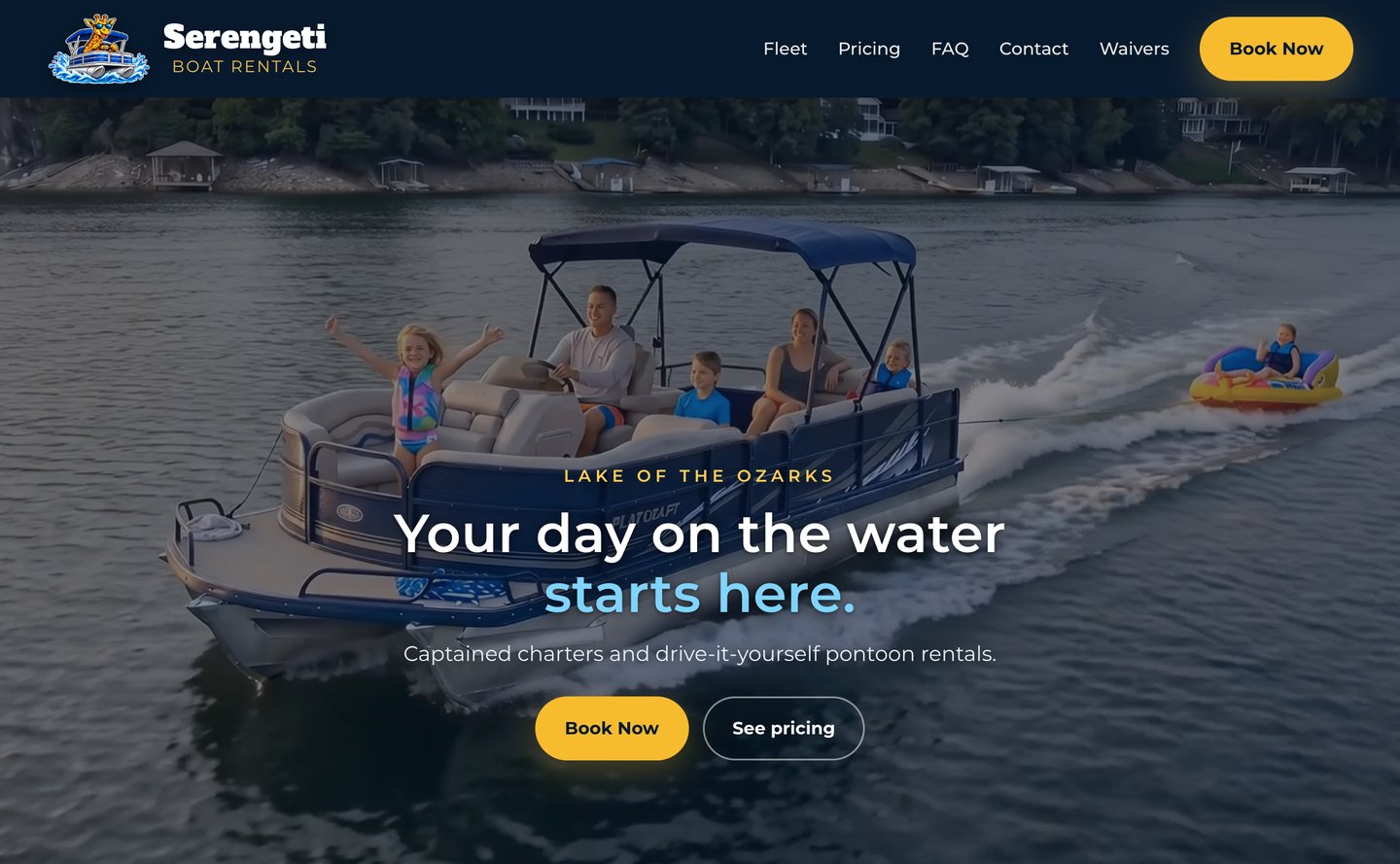
Boat rentals · Lake of the Ozarks
Captained charters and drive-it-yourself pontoon rentals on the Gravois Arm. Custom booking flow, live availability, drawn-signature waivers, and mileage-based pickup pricing on top of the Booqable API.
serengetiloz.com →
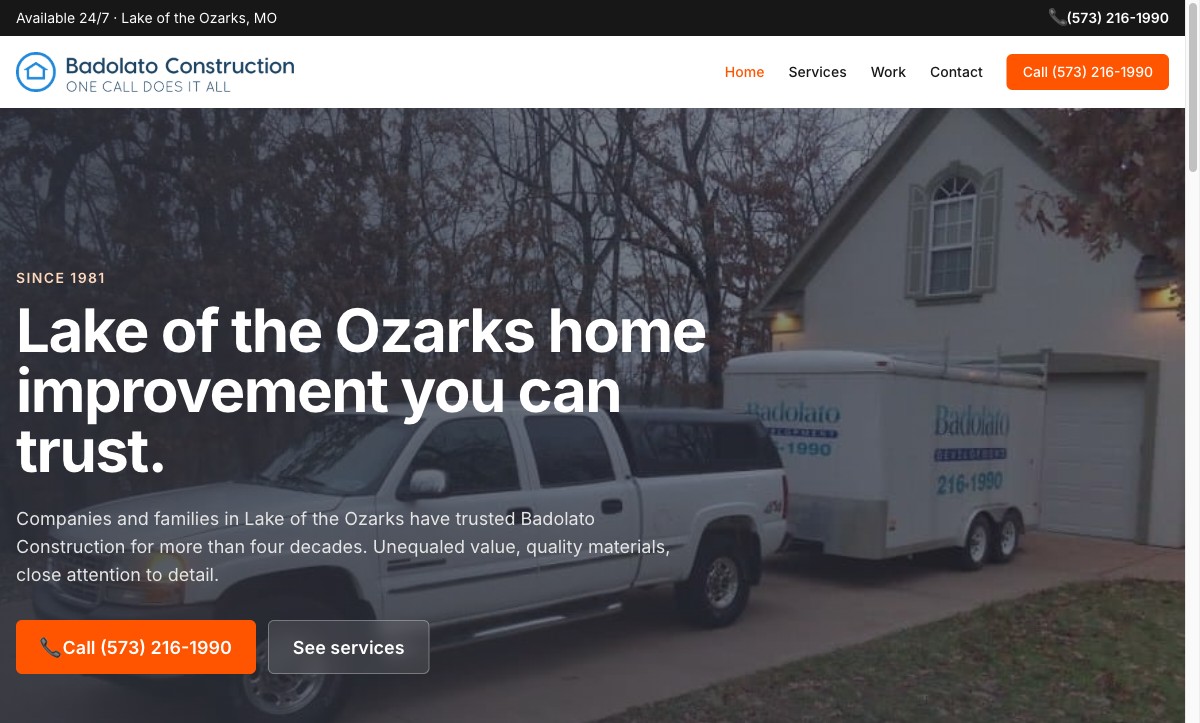
Home improvement · Lake of the Ozarks
A local family-owned home improvement company, in business since 1981. We built a simple, trust-first site with call-now CTAs and plain service pages.
badolatoconstruction.com →
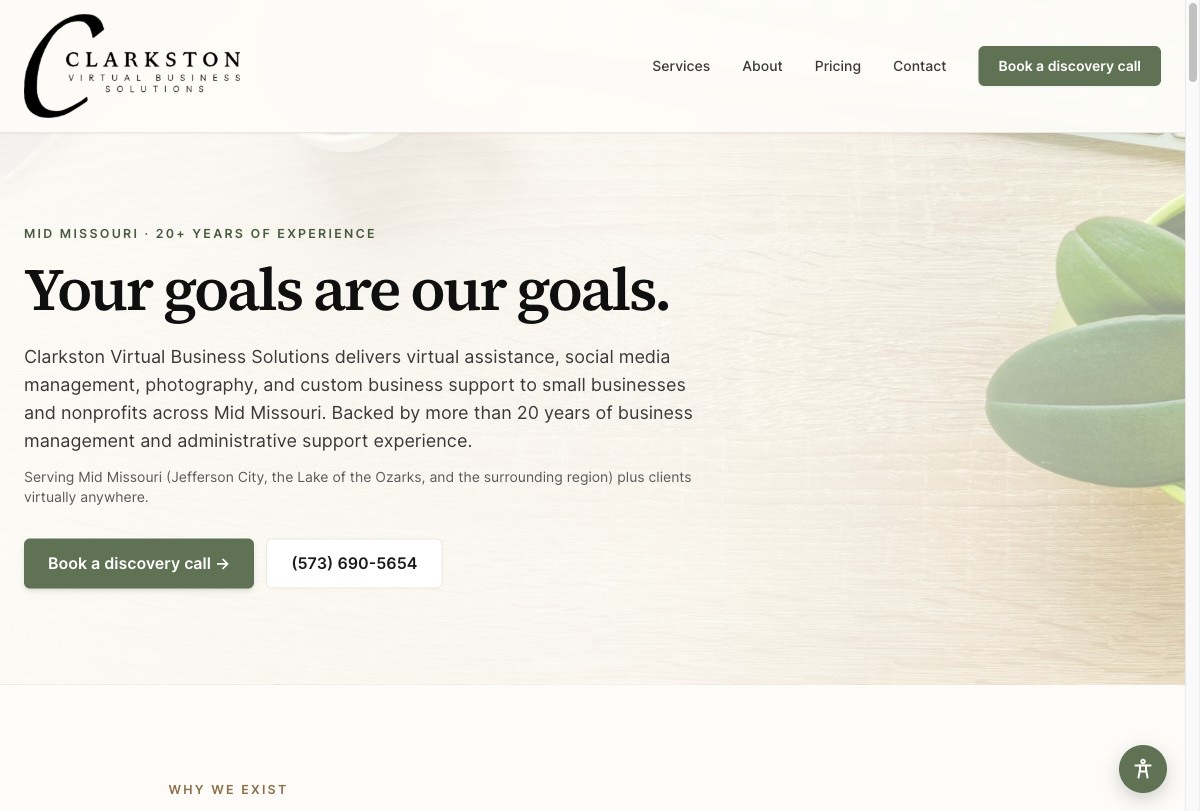
Virtual bookkeeping · Eugene, MO
A husband-and-wife virtual bookkeeping and admin firm in Eugene, Missouri. Single-page WordPress site, custom theme, contact form straight to the owner.
goclarkston.com →
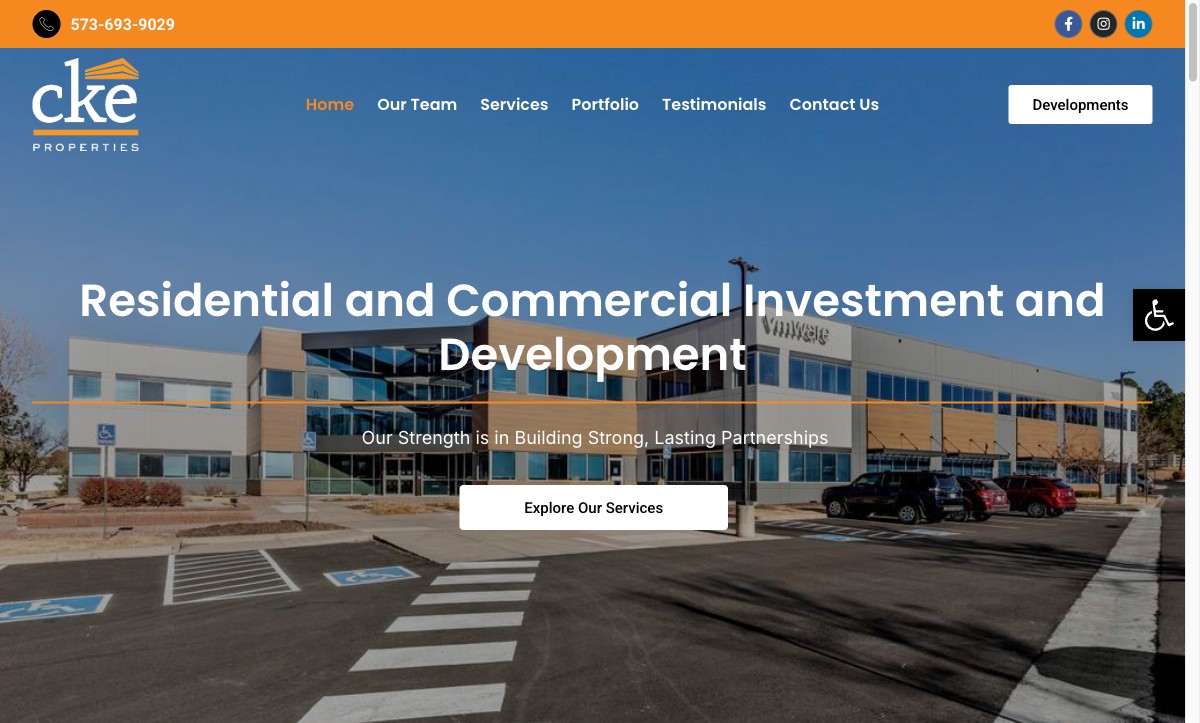
Real estate · Lake Ozark
Residential and commercial development here at the Lake. A clean, serious site that's easy to update and fast on a phone.
ckeproperties.com →
"Tim was easy to work with and very informative. He also understood the vision I had and executed it flawlessly within a matter of days. 100% recommend."

Ready to talk Booqable?
Tell us what your rental business needs the default widget cannot do. We reply within one business day with a written scope and price.
FAQ
Both, depending on scope. If the default JavaScript snippet does what you need and just needs styling and layout work to fit your brand, we tune it in place. If the widget cannot do what your business actually needs (custom fields, custom booking flow, custom pricing rules, waivers, delivery routing, workflow automation), we replace it with a native site integration that calls the Boomerang API directly. Same Booqable admin, different guest experience.
No. We are an independent digital agency that builds custom development on top of the Booqable public API. Booqable does not sponsor or endorse this page. Their platform, their trademarks, and their support are theirs; the custom code we write to extend the platform is ours.
Booqable exposes a public REST API called Boomerang (JSON:API spec, Bearer-token auth). You can read products, plannings (availability), orders, and customers, and you can create customers, orders, fulfillments, status transitions, notes, and fee lines. There is also a webhook system for a small set of event names. Docs live at developers.booqable.com. Booqable also has a legacy /api/1/ REST API from before Boomerang; do not mix the two. Everything modern is Boomerang.
Yes on all five, but the ceiling on how far you can customize the default JavaScript widget varies. WordPress and Shopify give the most room. Webflow works fine for the standard cart, and pairs well with a companion API-driven subdomain when the default is not enough. Squarespace allows the widget but restricts deep markup work. Wix is the most restrictive of the group. We can build to any of them, and we will tell you upfront when a platform is going to fight the integration harder than it is worth.
Yes. That is most of what we do. The custom booking form lives on your domain, in your visual design, with your form fields. It queries Booqable for live availability, creates the reserved order via the API, and drops the guest on your own confirmation page. The Booqable-hosted shop stays available as a fallback if you ever want it, but guests never see it in the primary flow.
Yes. Drawn-signature waivers on canvas, per-passenger participant waivers, and multi-page rental agreements. Each signed record is archived on your server as a permanent legal artifact (JSON metadata plus the signature PNG), emailed to your team with the signature attached, and posted as a note on the linked Booqable order so the whole booking history sits in one place.
Yes. Booqable does not compute complex delivery pricing natively, but the API lets us inject fee lines onto any order. We calculate the fee server-side from your rules (per mile, per zone, weekend surcharge, weekday discount, insurance, damage waiver, cleaning, whatever) and push the line into the Booqable order via the /lines endpoint. Guests see the live quote on your booking page and your Booqable admin shows the correct total.
Mostly, with a couple of quirks. Booqable webhooks fire reliably for the order.updated event and fire less reliably for order.reserved when the reservation transition is triggered via the API. We subscribe to both, dedupe on our side, and end up catching every path (customer checkout, admin edits, API-created orders). Webhook management on some accounts is API-only with no UI in the Booqable admin and no delivery log, so we monitor from our end.
A custom booking flow, waivers, and email automation dropped onto an existing site usually lands in the low to mid four figures. A full rental marketing site plus the custom booking flow, dynamic pricing, and webhook automation is mid four to low five figures depending on how many pages and how many workflow pieces. Every quote is a flat fee in writing after a discovery call. No hourly meters.
Yes. We do a quick review of the current Booqable configuration and any custom integration in place, then propose either targeted improvements or a rebuild depending on what we find. Common tune-ups: fixing canceled-reservation calendar bleed, moving off Zapier or Make.com when the workflow has outgrown them, replacing the widget with a native flow, adding waivers, and cleaning up webhook wiring.
Yes on the configuration and wiring. Booqable connects to Square, Stripe, Mollie, and a handful of others. We help you pick the right one for your fee structure, connect it inside Booqable, and set up the checkout mode that matches how you actually run the business (immediate charge, deposit hold, Pay Later, or a mix). Payment processing fees are between you and the processor. We do not touch card data.
Those are no-code and low-code automation platforms. They are great for small workflows (send this order to Xero, add this customer to a mailing list) and we happily use them when they fit. They cannot replace the guest-facing booking flow, custom pricing rules, waivers, or anything that needs to render on your website. When the workflow starts to look like a product feature rather than a one-way sync, that is when custom development wins.
Ready to talk?
We quote every project as a flat fee in writing once we understand the scope. Drop us a note, give us a call, or send a text. We'll get back within one business day.
Short reads on the projects we handle most. Service by service, industry by industry, and city by city across Missouri.
Services
Industries
Missouri service areas
Choices save on this device.
We are committed to providing a website experience that is accessible to the widest possible audience and to continually improving accessibility and usability across our website and services.
Our goal is to support applicable accessibility standards, including the Web Content Accessibility Guidelines (WCAG) 2.1 Level AA, through ongoing evaluation, testing, remediation, and improvement efforts.
Accessibility is an ongoing process. While we strive to make all pages and functionality accessible, some content or features may not yet fully conform to all accessibility standards at all times. We are continuously working to improve accessibility as technologies, standards, and user needs evolve.
This website may include tools and features intended to enhance accessibility and usability, such as options for text scaling, contrast adjustment, and reduced motion preferences. These tools are intended to assist users but may not address every accessibility need or work equally for all users or assistive technologies.
If you experience difficulty accessing any content, feature, or functionality on this website, or if you have specific accessibility questions or concerns, please contact us. We take accessibility feedback seriously and will make commercially reasonable efforts to address reported issues and provide requested information or services through an alternative method where appropriate.
Contact: Get in touch through our contact page →
Last updated: 2026